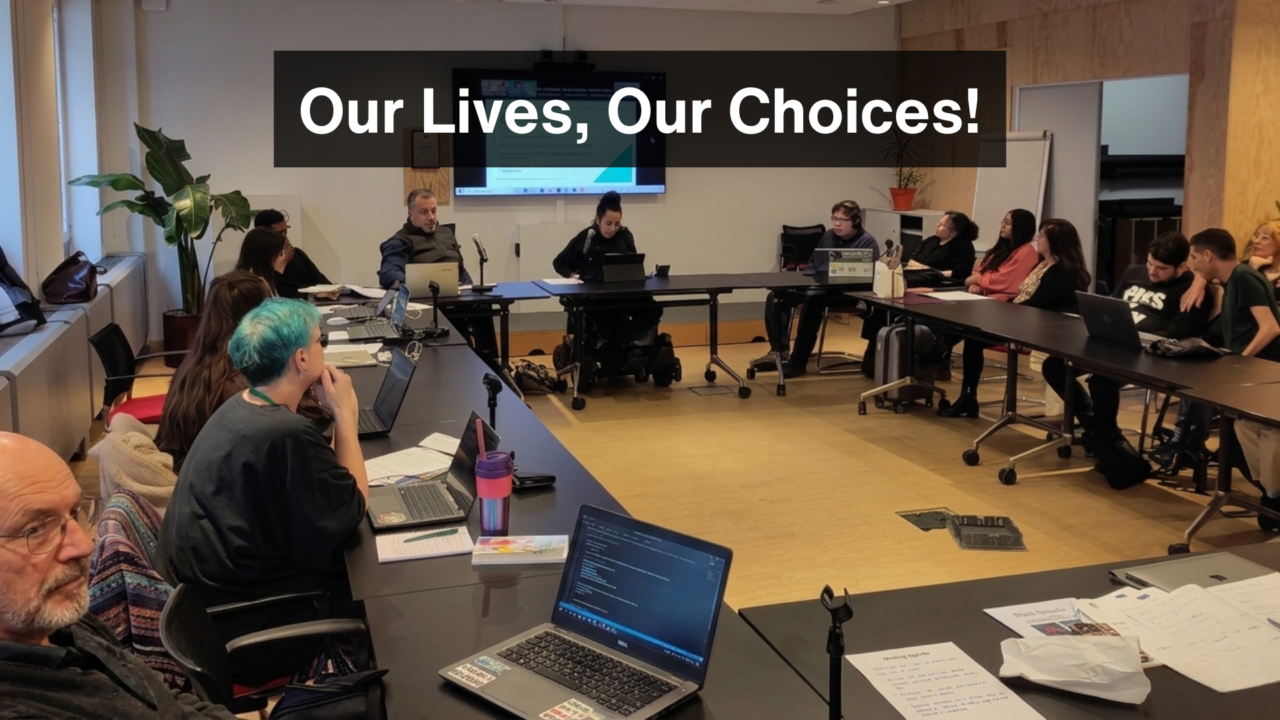
On 5 May 2026, ENIL marked European Independent Living Day with a hybrid event in Brussels focused on legal capacity and supported decision-making.
The event brought together self advocates, activists, organisations of persons with disabilities, legal experts and policymakers to discuss why legal capacity remains one of the biggest challenges for disabled people across Europe.
A strong message throughout the day was that progress on legal capacity is slowing down and, in some countries, even being reversed. Participants discussed both the barriers that still exist and possible ways forward.
Soufiane El Amrani – a self-advocate from Inclusion Europe – spoke about the importance of being able to make everyday decisions and how many people with intellectual disabilities are still denied this right through guardianship systems. He stressed that everyone needs support and advice in their daily lives and that disabled people should also have access to supported decision-making instead of having decisions taken away from them. Soufiane also highlighted positive developments in countries such as Ireland, Spain and Germany, where reforms have introduced more supported decision-making systems.
Another self-advocate Nicolas Jouncor, reflected on how guardianship and ableism continue to affect disabled people across Europe despite the adoption of the UN CRPD 20 years ago. The presentation highlighted that, although countries such as France have international obligations to recognise disabled people’s legal capacity, guardianship systems are still widely used. The speaker also stressed the importance of challenging stigma and exclusion while promoting autonomy, emancipation and independent living.
In his opening remarks, Freddy Jussien from Inclusion Europe stressed that 2026 marks 20 years since the adoption of the UN CRPD, yet many disabled people across Europe can still have their legal capacity removed through guardianship systems. He reminded participants that legal capacity is not only a disability issue, but a fundamental human rights issue.
Marine Uldry from the European Disability Forum explained that while some countries have introduced reforms, guardianship and substituted decision-making systems are still widely used across Europe. She stressed the need for clear supported decision-making systems that respect people’s will and preferences and called on the EU to promote reforms and peer learning between countries.
Dea Eremashvili presented the example of Georgia, where guardianship was removed from the law in 2014 and replaced with support systems. However, she explained that in practice many people with disabilities still face discrimination, institutionalisation and misunderstanding about what “support” really means.
Kristijan Grdan from Mental Health Europe spoke about the barriers faced by people with psychosocial impairments. He highlighted that coercive practices, institutionalisation and stigma still prevent many people from exercising legal capacity and living independently in the community.
Markus Schefer, member of the UN CRPD Committee, spoke about states’ obligations under Article 12 of the UN CRPD and raised concerns about EU proposals linked to the 2000 Hague Convention, which could continue to allow the cross-border recognition of substituted decision-making systems.
Participants also heard positive examples of supported decision-making models, including reforms proposed in Malta and projects promoting self determination and autonomy for persons with intellectual impairments.
Some of the main takeaways from the event were:
- Self advocates are urging organisations and policymakers not to accept the current situation and to continue pushing for change
- The EU should become a catalyst for legal capacity reforms across Europe
- Successful examples of supported decision-making should be promoted and shared more widely
- Laws alone are not enough: attitudes, services and support systems also need to change
Throughout the event, speakers repeatedly reminded participants that legal capacity is closely connected to independent living, dignity and emancipation.
Because without legal capacity, independent living is not possible.
Special thanks to all speakers: Freddy Jussien, Marine Uldry, Dea Eremashvili, Kristijan Grdan, Markus Schefer, Nicolas Joncour, Soufiane El-Amrani, Simon Johansson, Agneta Scherman, Thiandi Groof, Jo Minchin, Alistair de Gaetano, Simona Florescu, María Reyes Sánchez Moreno, Krzysztof Śmiszek, Pia Lindholm and Nadia Hadad for sharing their expertise, experiences and perspectives throughout the event.