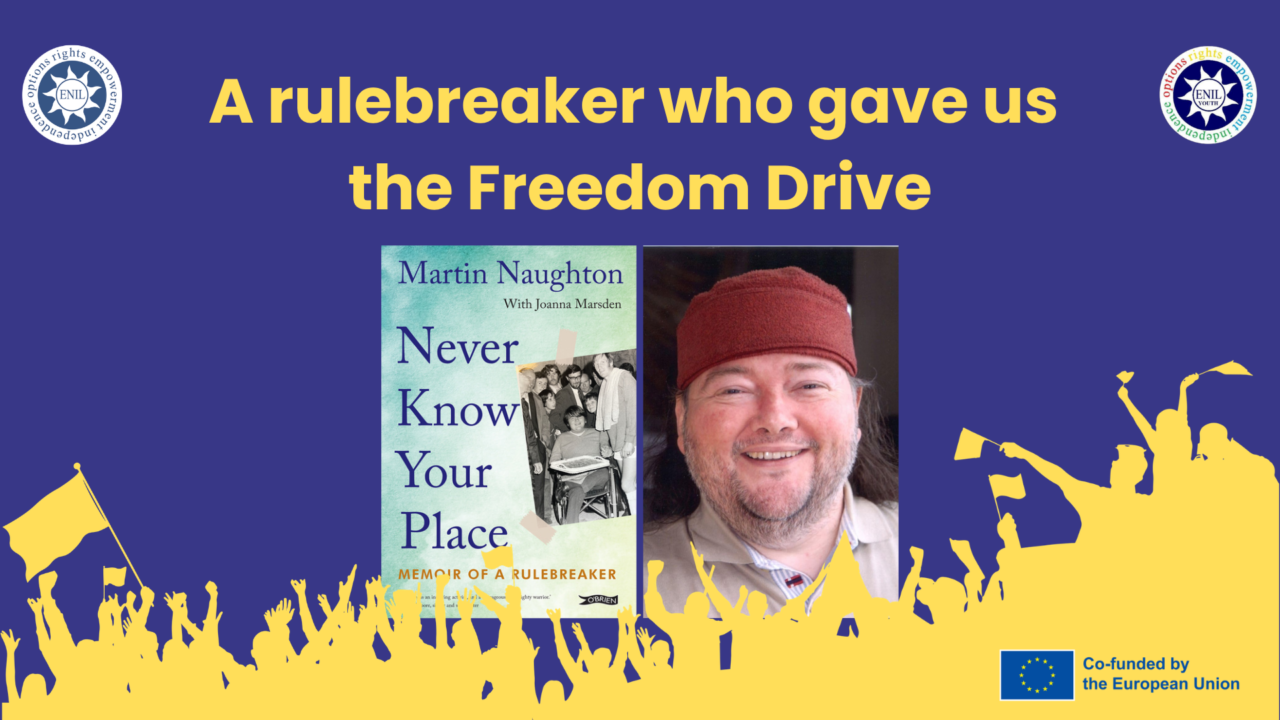
There are some individuals who live in relentless pursuit of a just cause, who toil for their own human rights and those of their peers, and who leave a legacy that inspires those who succeed them. That is Martin Naughton.
A native of Galway, Martin was born into an Irish-speaking community in rural west of Ireland. From early childhood he was diagnosed with muscular dystrophy, a progressive condition that gradually weakened his muscles and affected his mobility. At the age of nine he became a wheelchair user, and, like many children of his generation, was sent to an institutional hospital in Dublin for treatment.
The indignity of institutional life was immediately apparent to the young Martin, and became a source of considerable distress. The very atmosphere of the institution felt oppressive. Cut off from their local communities, and with parents discouraged from visiting to aid their ‘transition’, the hospital children were left with a profound sense of hopelessness.
Nevertheless, Martin always strove to make the best of his situation. ‘I spent my idle minutes devising ways to add colour to our days. I might as well live for the moment,’ he wrote. Growing in years and in confidence, Martin found new ways to challenge the hospital authorities to give him and the other children more independence. This was the beginning of a life-long endeavour.
With the help of non-disabled allies, Martin travelled throughout North America, where he learned the language and philosophy of Independent Living. He saw first-hand how disabled people could live with autonomy in their own communities, and he was determined to make this a reality in his home country.
Martin’s advocacy, which grew from his institutional hospital, would have a lasting impact on the Independent Living movement. He established Centres for Independent Living, founded NGOs, and led protests that forced the Irish state to concede greater supports for disabled people.
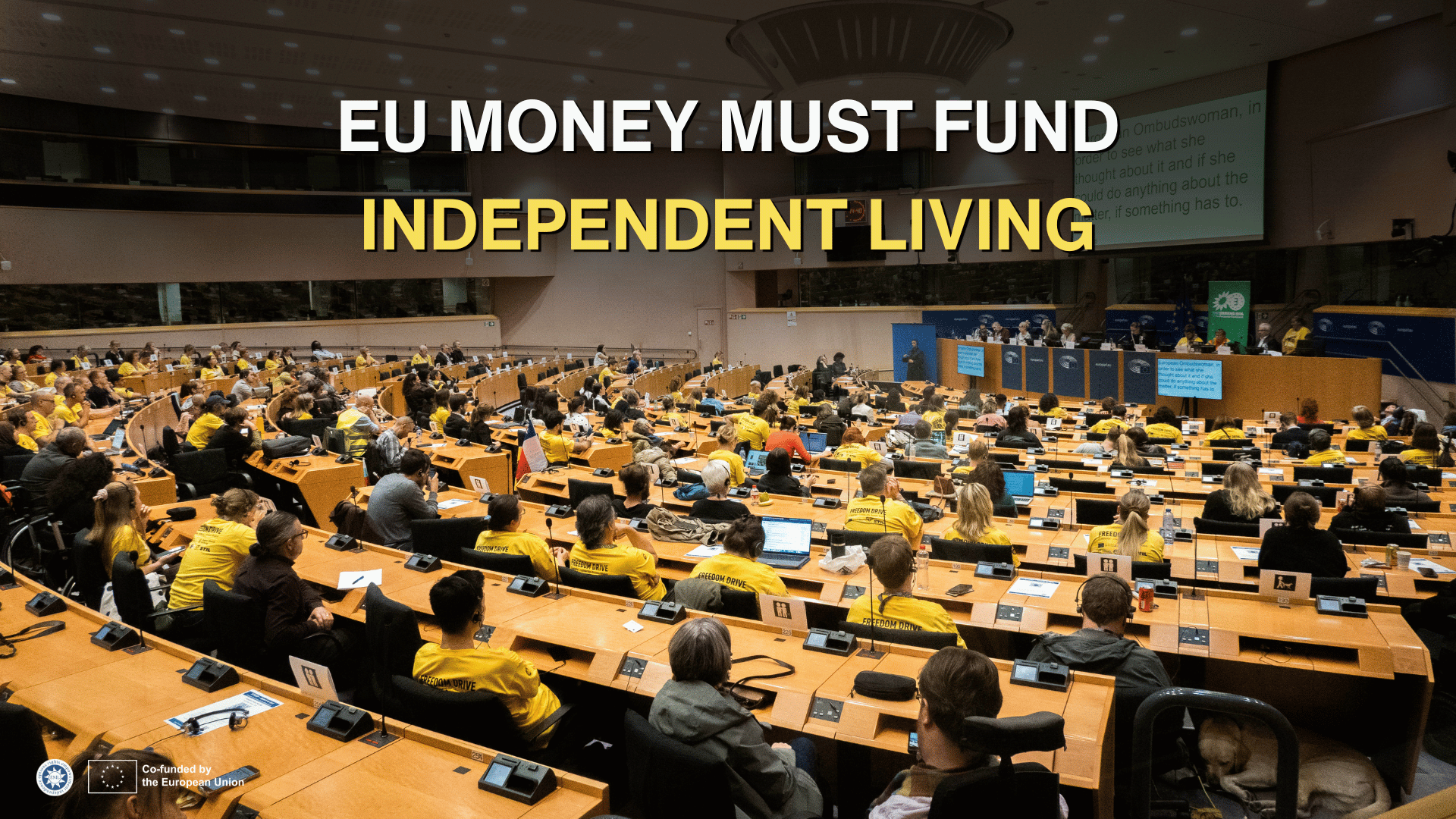
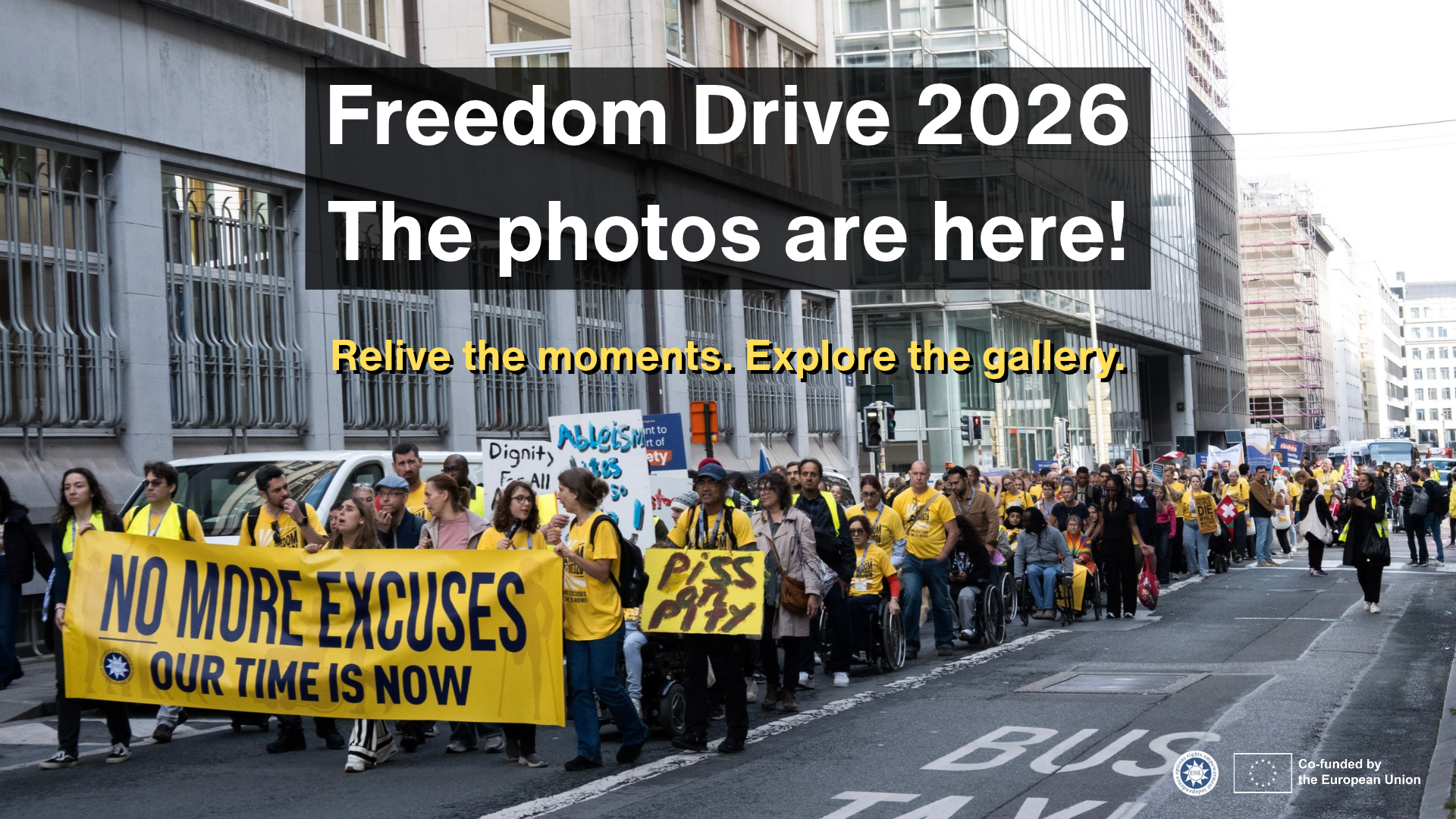
His pioneering activism extended throughout the European continent. Indeed, he was a founding member of ENIL and served as the organisation’s President. In 2003 he proposed a radical idea: to gather disability activists from across the continent and march on the European Parliament. They would demand their rights and vow to return every two years until Independent Living was a reality for all disabled people across Europe. And thus, the Freedom Drive was born.
The Freedom Drive quickly became an enormously successful focal point for ENIL’s activism, and it continues to march, even after Martin himself had stopped leading it. He passed away ten years ago, in 2016, at the age of 62. Martin never got to see Independent Living become a reality for every disabled person in Europe. What he left behind wasn’t a finished system, but a methodology: to organise, demand, and make our voices heard.
From his gloomy childhood institution, Martin envisioned a future society in which disabled people could flourish as active and equal citizens. He worked tirelessly to make that a reality. Those ideals for which Martin and his peers worked so hard and for so long are now under their greatest threat yet. It will take people like Martin to ensure they are not eroded.
Michael Brennan
Member of the ENIL Youth Board