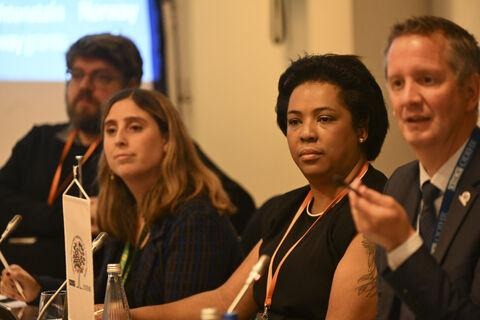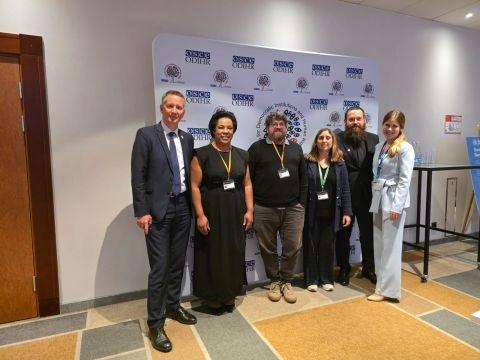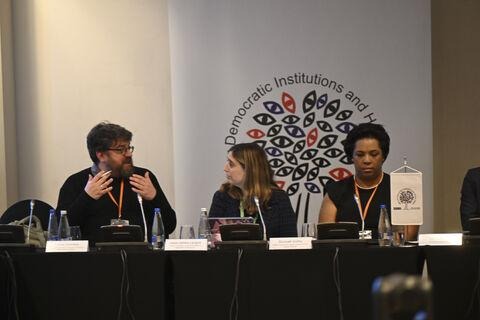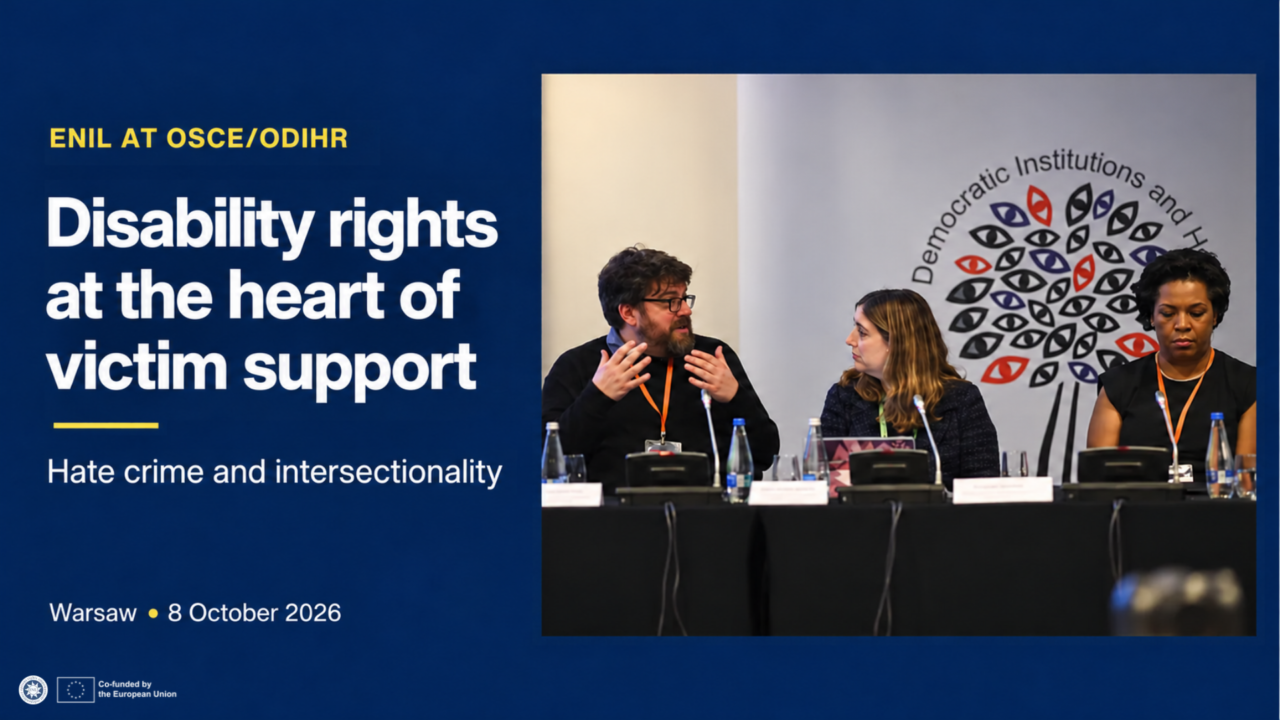
On 8 October 2026, the European Network on Independent Living (ENIL) participated in a side event organised by the OSCE Office for Democratic Institutions and Human Rights (ODIHR) during the Warsaw Human Dimension Conference 2026.
The event, “Addressing hate crime and supporting victims: Practical guidance on an intersectional approach”, brought together civil society representatives and practitioners to discuss how different forms of discrimination can intersect in hate crimes and how institutions can better respond to victims’ individual needs.
ENIL was represented by Project Coordinator Adela Santos Lavigne, who contributed to a panel discussion alongside Donnah Vuma, from Migrant Victims of Crime Support in Ireland, and Tamás Dombos, from Háttér Society in Hungary.
Disability must be part of the analysis from the beginning
ENIL’s intervention, entitled “Disability and intersectionality in hate crime: from recognition to effective support”, focused on the need to ensure that disability is not treated as an additional consideration at the end of an intersectional analysis.
Persons with disabilities are not a homogeneous group. Disability can intersect with gender, ethnicity, religion, sexual orientation, age and other characteristics, influencing both why a person is targeted and the consequences of the crime.
Looking at only one possible bias motive may mean overlooking important aspects of the victim’s experience. This can affect how hate crimes are recorded, investigated and ultimately recognised.
The discussion also highlighted that the impact of a crime cannot always be understood without considering the barriers a person may face afterwards. For example, damage to a wheelchair may not only represent material loss but also affect a person’s mobility, independence and participation in everyday life.
Removing barriers to justice and victim support
Another central message of ENIL’s contribution concerned the barriers that persons with disabilities may encounter when reporting crimes and participating in criminal justice proceedings.
Communication differences, inaccessible procedures and assumptions about disability can affect how victims are heard and how their credibility is assessed. These barriers may discourage victims from reporting crimes or prevent important information from being properly understood.
ENIL also highlighted the importance of moving away from approaches that automatically describe persons with disabilities as vulnerable, without recognising how institutional and environmental barriers can create or increase vulnerability.
Reasonable accommodation and individualised needs assessments are therefore essential to ensuring effective access to justice.
ENIL proposed three practical steps for professionals working with victims: Ask. Assess. Adapt.
This means asking individuals about their needs, assessing the barriers they experience and adapting procedures accordingly. Support measures should enable persons with disabilities to participate and make their own decisions, rather than replacing their voices.
As highlighted in ODIHR’s official coverage of the event:
“Support is only effective if people can access it. For a person with a disability who experiences hate crime, that means considering accessibility alongside the different forms of prejudice they may face, and involving them in decisions about the support they receive.”
— Adela Santos Lavigne, ENIL Project Coordinator
Contributing to future practical guidance
The event formed part of ODIHR’s ongoing work to develop practical guidance on intersectional approaches to hate crime and victim support, supported by the EEA and Norway Grants.
The experiences and perspectives shared during the discussion will help inform this guidance, which aims to support practitioners in recognising intersecting forms of discrimination and responding more effectively to victims’ circumstances.
ENIL welcomes the opportunity to contribute to this important discussion and to promote a disability rights-based approach to victim support and access to justice.
Ensuring that persons with disabilities can report crimes, participate effectively in proceedings and access appropriate support is essential to protecting their rights and promoting their full participation in society.