On 5 May 2026, Greek MEP Giorgos Aftias announced that he had submitted a question to the European Commission asking for funding for “model social centres” and “European villages” for disabled children and their parents. In his question, he said that many parents are worried about what will happen to their disabled children after they die, and called on the Commission to support these projects financially. The proposal also mentioned personal assistants within residential structures and training centres for parents.
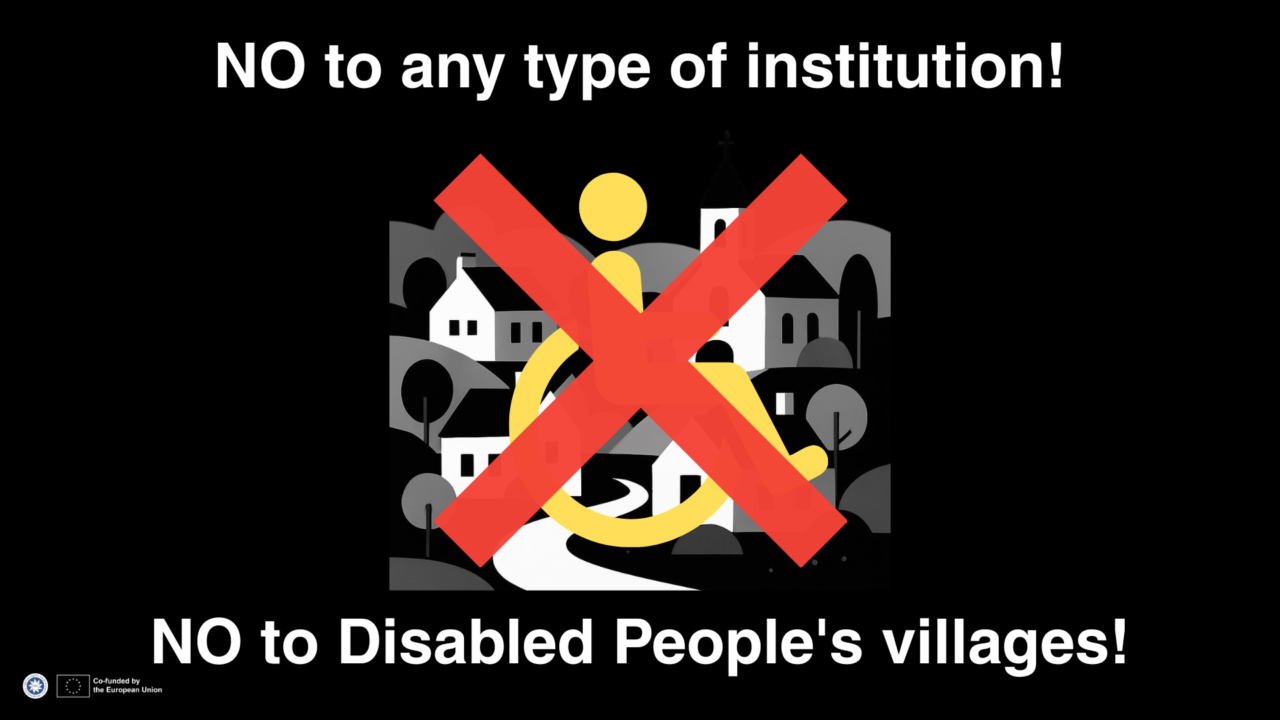
While the fear and uncertainty experienced by many families is real and must be taken seriously, the proposed solution has caused deep concern within the Greek and European Independent Living movement. Disability rights advocates argue that building separate “villages”, specialised centres and other segregated care settings is not progress. It is a return to an outdated institutional model that Europe has committed to leave behind.
From the perspective of the Independent Living movement, separating disabled people from non-disabled people “for their own good” does not protect them. It isolates them from society, limits their participation in community life and reinforces the idea that disabled people should live apart from everyone else. The movement’s response is clear: disabled people should not be placed in special settlements or lifelong care structures, but should have the support they need to live in the community on an equal basis with others.
This is also what Article 19 of the UN Convention on the Rights of Persons with Disabilities requires. The right to live independently and be included in the community means having real choice and control over where, how and with whom to live. It means access to personal assistance, accessible and affordable housing, inclusive education, work and community-based support services. It does not mean replacing large institutions with smaller segregated settings under a different name.
Particularly troubling is the idea, included in the proposal, that a parent should grow old and continue living inside such a structure with their disabled child in order to guarantee continuity of care. Τhis approach treats disabled people as permanently dependent on family care instead of recognising them as autonomous citizens with rights, preferences and the ability to make choices about their own lives. The issue is not how to preserve lifelong dependency more comfortably. The issue is how to ensure rights, support and emancipation.
At the heart of this response is a simple principle: Nothing Without Us. Policies for disabled people cannot be designed over their heads, and they cannot be based only on the fears of others, however understandable those fears may be. They must be shaped by the voices, rights and lived experience of disabled people themselves.
The debate sparked by this parliamentary question is therefore much bigger than one proposal. It goes to the heart of what kind of Europe we want: one that funds segregation and dependence, or one that supports dignity, autonomy and full inclusion in the community.
ENIL has emailed MEP Aftias, highlighting all the above and offering to support him in promoting Independent Living and inclusion.