Disabled people are too often excluded from conversations around sexuality, intimacy and relationships. Society frequently treats disabled people as if they are either asexual, incapable of relationships, or should not openly discuss pleasure, intimacy and sexual wellbeing at all.
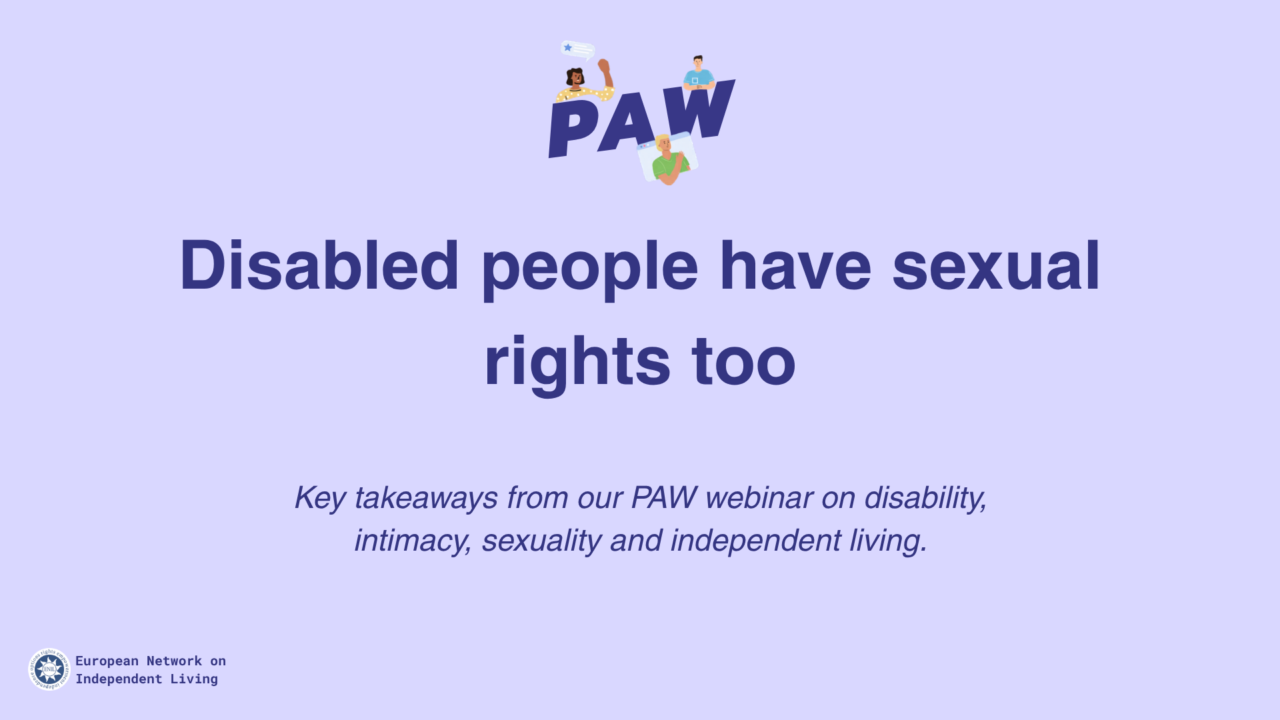
During ENIL’s Personal Assistance Watch webinar on disability, intimacy, sexuality and independent living, participants challenged these stereotypes and discussed why sexual rights are human rights and an essential part of independent living.
The webinar brought together speakers and participants to reflect on sexuality, autonomy, pleasure, relationships, personal assistance and access to information. One of the strongest messages throughout the discussion was that independent living should not only focus on survival and basic needs, but also on quality of life, intimacy, pleasure and emotional wellbeing.
As one participant mentioned:
“The narrative changed from personal assistance being only about survival to including pleasure as well.”
Participants discussed how disabled people are too often denied privacy, intimacy, relationships and autonomy over their own bodies. The discussion stressed that equal access to sexual life is not simply a personal issue, but a matter of rights and dignity.
“Equal access to sexual life is not about individual desire. It’s about human rights.”
The webinar also highlighted that sexuality and sexual health should be recognised as part of overall health and wellbeing. Participants stressed that conversations around sexual health must move beyond risk and prevention alone and include pleasure, intimacy and emotional wellbeing.
“You cannot talk about health without talking about sexual health, and in sexual health there is pleasure.”
Another important topic was access to sexual education. Speakers noted that disabled children and young people are often excluded from accessible and inclusive sexual education, leaving many without information about consent, relationships, safety and their own bodies.
“Sex ed should be available for every child, disabled or non-disabled. Information is power.”
Participants also warned that lack of accessible sexual education can increase vulnerability to abuse and violence, especially for disabled women and people with intellectual disabilities. One participant pointed out that many disabled women are not supported to recognise sexual violence or abusive situations.
“A lot of disabled women cannot recognise sexual violence.”
The webinar further explored how support needs around sexuality differ from person to person and should always be approached with dignity, consent and respect. Discussions included how some disabled people may need support or facilitation before, during or after sex, and why these conversations should not be treated as shameful or ignored.
“Some people might need facilitation before or after sex, and some during sex.”
Overall, the discussion highlighted that sexuality, intimacy, pleasure and relationships are part of wellbeing and independent living, and that disabled people must have equal access to information, autonomy, support and rights.
Thank you to everyone who joined the webinar and shared their experiences and insights, especially Nadia Morand and Ingrid Thunem.