By Kamil Goungor – ENIL
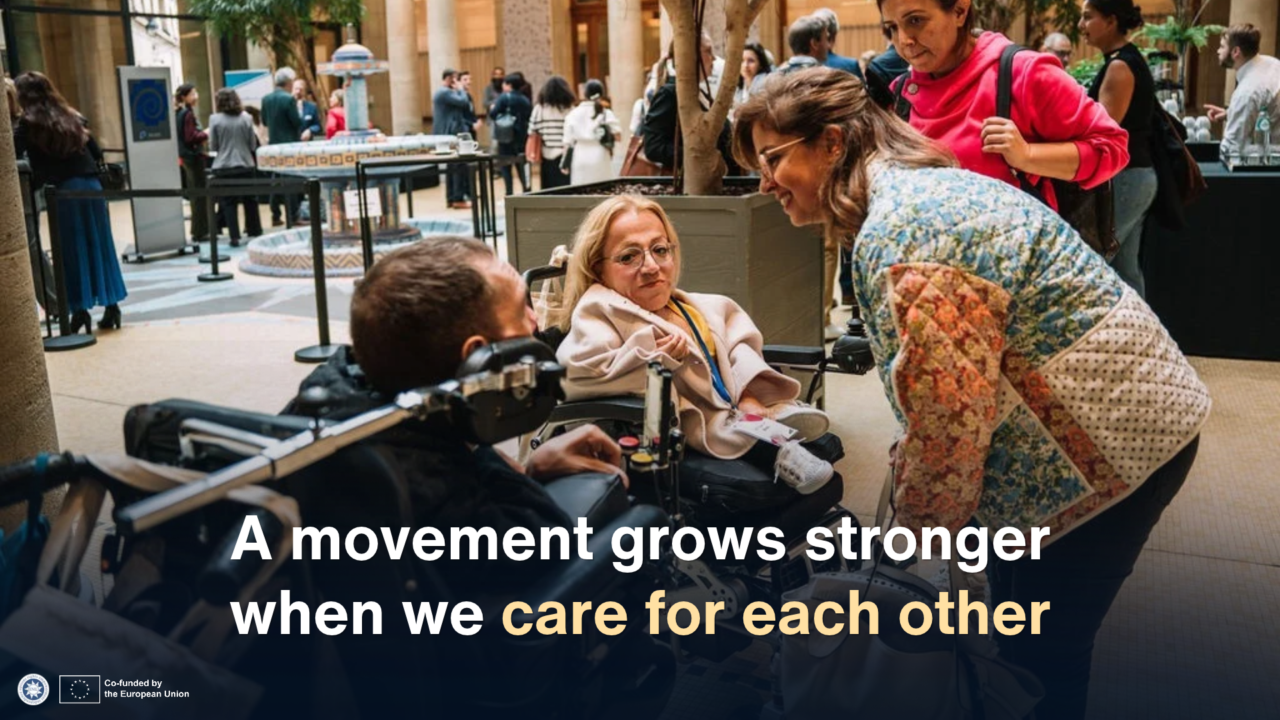
Movements are not built only through papers, research and events. They are built by people who care about each other.
We spend a lot of time in (disability) activism producing things like reports, position papers, research, conferences, meetings, campaigns, statements and events. All of these things are important, and I spend most of my working life doing exactly that. But day by day, I realise that none of them is the most important part of our work.
The most important thing we do is to connect with each other. At least for me.
Before we can fight as a movement, we need to become and feel that we are part of one. We need to know each other, trust each other, share experiences and care about what happens to one another. And when that happens, I think we become much more powerful.
This is nothing new. Think about the various civil rights movements, including the disability rights and Independent Living movements in the USA, and later in Europe. People had common political demands and wanted to change society, but they didn’t spend all their time organising demonstrations or discussing policy. They also ate together, argued, laughed, partied, sometimes smoked a joint together, became friends and supported each other through difficult moments.
You can see this in the history of the Independent Living movement and the first Center for Independent Living, as described in An Independent Man: Ed Roberts and the Fight for Disability Rights, a book I am reading at the moment. What was happening there wasn’t simply professional cooperation between people who happened to share the same advocacy and political objectives. People cared about each other. They shared knowledge based on their lived experience and helped each other navigate a society that excluded them. It was peer support at its best (Ed Roberts was saying that peer counseling was the most important thing their CIL did), but it was also something deeply human. And from those relationships came political power.
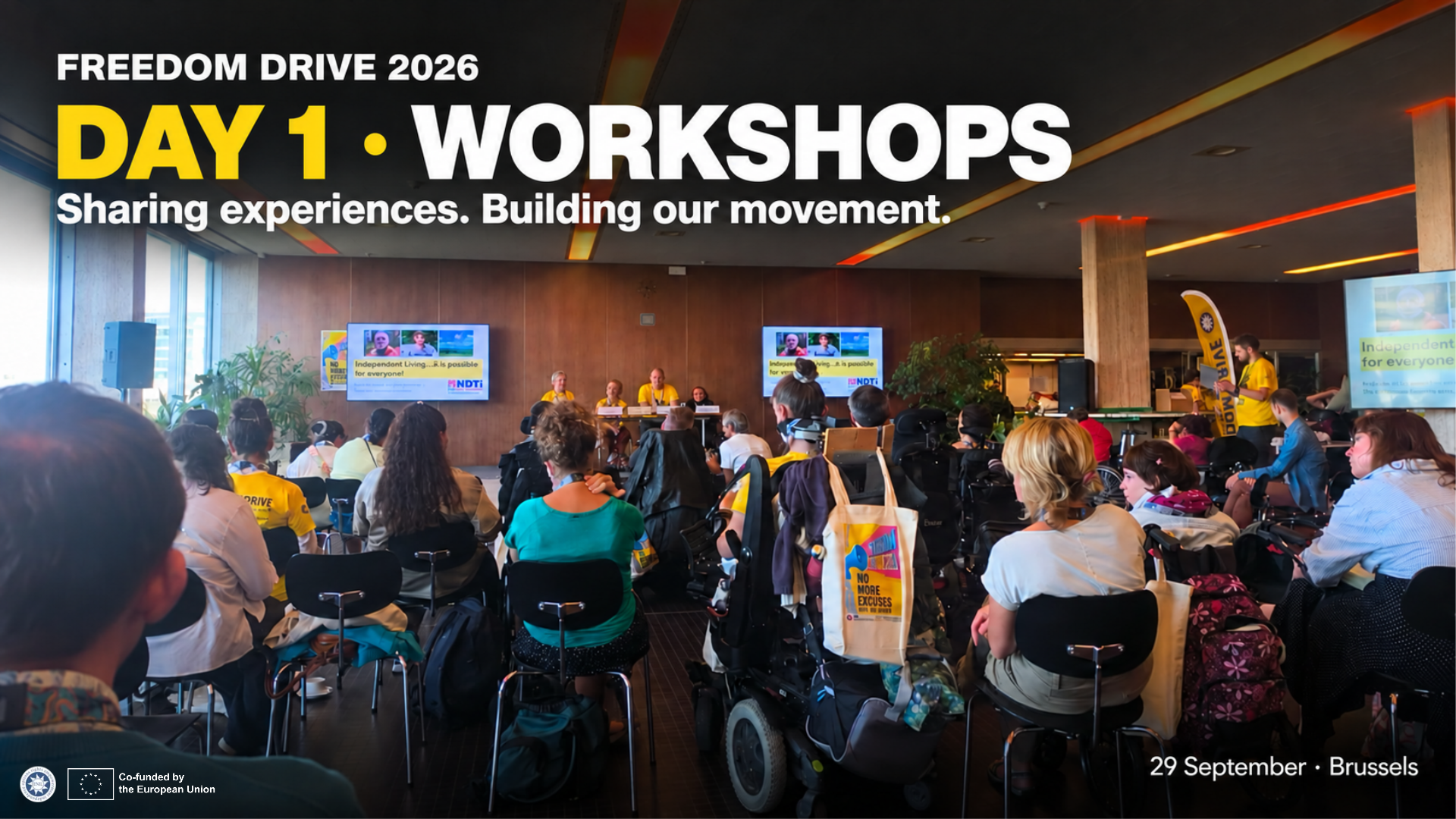
I was personally reminded of all this during this year’s Freedom Drive. Just minutes away from an event I had spent so much time working on and preparing for, and for which I had been very excited about, I got sick. And I missed it…
Anyone who knows me can probably imagine how frustrating that was. Afterwards, a colleague told me, “Sorry you missed it, we know how much you like socialising”. My immediate thought was: it’s not socialising, it’s connecting.
Of course I like socialising. I like talking, laughing, making jokes and spending time with people. But what I value about these moments, especially within our movement, goes much deeper. Meeting someone from another country who is fighting the same battles, sharing experiences that need very little explanation, discussing Independent Living over dinner and then completely forgetting about work for the next few hours, all of this creates something that no report or conference session can create.
And strangely, even though I missed Freedom Drive physically, in many ways I still felt part of it. My phone and laptop kept bringing Freedom Drive to me. I received messages, photos, updates and even gossip. People who were there took the time to ask how I was doing. Others told me they missed me, checked whether I needed anything and offered support. Some visited me. I even got a gift!
I wasn’t at the meeting venue, at the protest or in the European Parliament. I didn’t join everyone afterwards at the party (even though I was hoping for it till the last minute). But I didn’t feel disconnected. I still felt part of Freedom Drive. Maybe this is the best example I can give of the power of connection. When relationships are real, being absent from the room doesn’t mean being absent from the movement.
Getting sick also made me experience this in an even more personal way. Personal assistance is very important in our lives. It allows us to live independently, travel, work and participate in events like Freedom Drive. But the care I received from my PA (and that another participant who ended up in hospital received from his PA) went beyond a job description. We had health problems, we were vulnerable (I hate this word, but here it works), and they were there for us as human beings with whom they had developed real relationships. I think this is a very special thing about the Independent Living movement.
This also makes me think about something that sometimes saddens me about activism today. Our movements have become much more professional, which has brought many positive things. But sometimes I feel that, especially among the new generation, the relationship with an organisation or movement can become very much a 9 to 5 one. At 5pm, the laptop closes and so does the connection.
And I don’t mean that people shouldn’t have boundaries. Of course they should, I learnt that well. Nobody should have to sacrifice their personal life or burn themselves out for a movement. But there is a difference between having boundaries and seeing activism simply as a job. If our connection to a movement exists only during working hours, I think we lose something that previous generations understood very well.
Because the movement is also what happens after the conference finishes. It is the dinner afterwards, the book exchange, the conversations that have nothing to do with the agenda, the friendships that cross borders, the person who notices you are missing, the message asking if you are ok, and the person who stays with you when you are sick. It is knowing that somewhere else in Europe there are people who are no longer simply names in your inbox, but people whose lives matter to you. People you want to meet even if you are on vacation in their city.
Maybe that is one of the differences between an organisation and a movement. An organisation can function because people work together. A movement goes beyond that and becomes powerful because people feel that they belong together.
I missed Freedom Drive this year, but in a way, I was still there. Thank you for that. This is the power of true connection. The power of our movement.