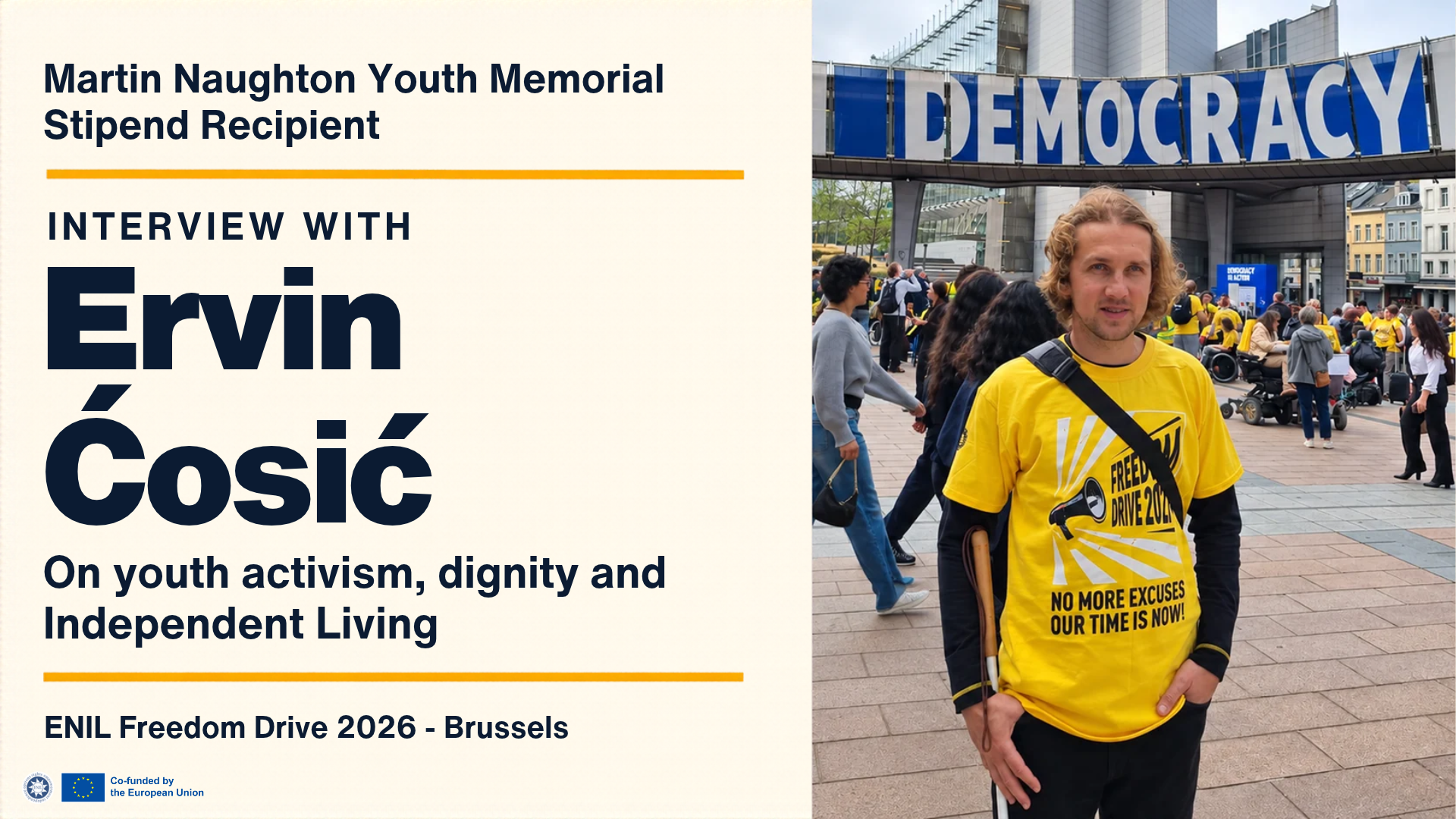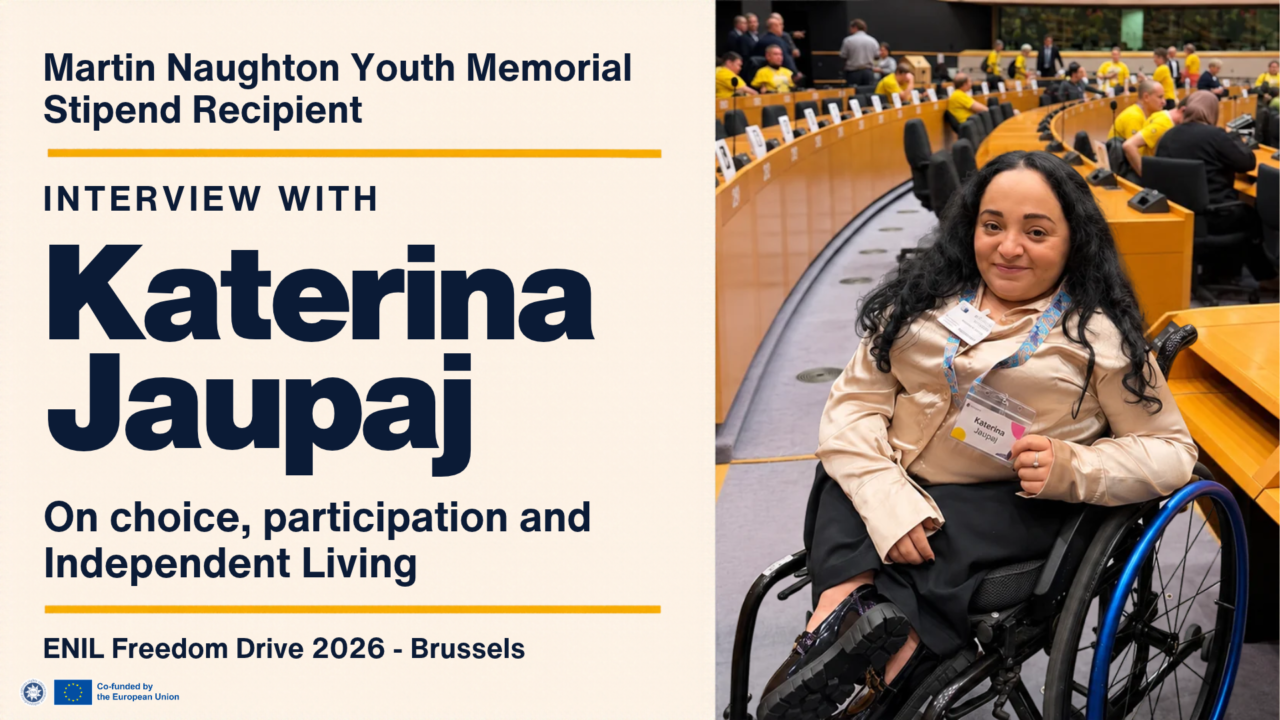
Katerina is one of the two young people who received the Martin Naughton Youth Memorial Stipend to attend the 2026 ENIL Freedom Drive in Brussels. After the event, the ENIL Youth Network Board wanted to learn what this experience meant for her and give you an opportunity to get to know her. This is what she shared:
- What motivated you to apply for the Martin Naughton Youth Memorial Stipend?
I applied because I wanted to learn from disabled people across Europe, expand my knowledge of the Independent Living movement, and connect with young activists who share similar goals. I also wanted to bring new ideas and experiences back to Albania and strengthen my work in disability advocacy.
- What does Independent Living mean to you personally — beyond its formal definition?
After taking part in the Freedom Drive, Independent Living means even more to me. It means having the freedom to make my own choices, the right support to participate in society, and being seen as an equal. It is not about doing everything alone—it is about having control over my own life.
- Was there a particular moment or experience that made you realise you wanted to become involved in disability activism?
Meeting other disabled activists during the Freedom Drive reinforced why this work matters. Hearing different experiences while recognising many shared challenges reminded me that disability rights are human rights and that collective advocacy creates real change.
- What is one thing you wish you had known when you first started advocating for disability rights?
I wish I had known how valuable networking is. Meeting activists from different countries showed me that sharing experiences and supporting each other is just as important as campaigning for change.
- What is the biggest barrier young disabled people face when they want to become activists or leaders?
The biggest barriers are inaccessible environments, limited opportunities, and low expectations. Many young disabled people have the motivation to lead but lack equal access to education, employment, networking, and decision-making spaces.
- Do you think young disabled people are genuinely listened to in decision-making spaces, or are they sometimes only invited to “tick the inclusion box”?
There has been progress, but too often young disabled people are still included only symbolically. Meaningful participation means our ideas influence decisions, not simply that we are present in the room.
- What is one stereotype about disabled young people that you would most like to challenge?
That disabled young people are passive or dependent. We are students, professionals, leaders, and advocates. We simply need equal opportunities to contribute.
- How do you balance activism with your personal life, studies, work, or simply having time to be a young person?
I am currently completing my Master’s degree while working and volunteering, so balancing everything requires planning and prioritising. I also remind myself that taking breaks is important because long-term advocacy requires looking after yourself.
- Where is the line between activism and work? Should disability activism always be paid, and how does money change the way we think about activism?
Activism is driven by values, but that does not mean it should always be unpaid. Disabled activists contribute expertise based on lived experience, and that work deserves recognition. Fair pay makes advocacy more sustainable without changing its purpose.
- If you could change one thing in your country tomorrow to improve the lives of young disabled people, what would it be?
I would establish accessible, high-quality personal assistance services. They would allow many disabled people to study, work, travel, and participate fully in society.
- What would you like to achieve with the opportunities, connections, or experience that come with the Martin Naughton Youth Memorial Stipend?
The stipend helped me build valuable connections, learn from experienced activists, and gain new perspectives on Independent Living. Going forward, I want to use those experiences to strengthen disability advocacy in Albania, encourage more young disabled people to become involved, and contribute to creating a more inclusive society.
- If disability activism disappeared tomorrow because we had achieved everything we are fighting for, what would you want to do with all that time and energy instead?
I would enjoy living in a truly inclusive society. I would continue working in social services, supporting other human rights causes, travelling, and simply enjoying the freedom that disability activism helped make possible.