What actually makes an Erasmus+ and ESC project inclusive? And why they are not inclusive already?
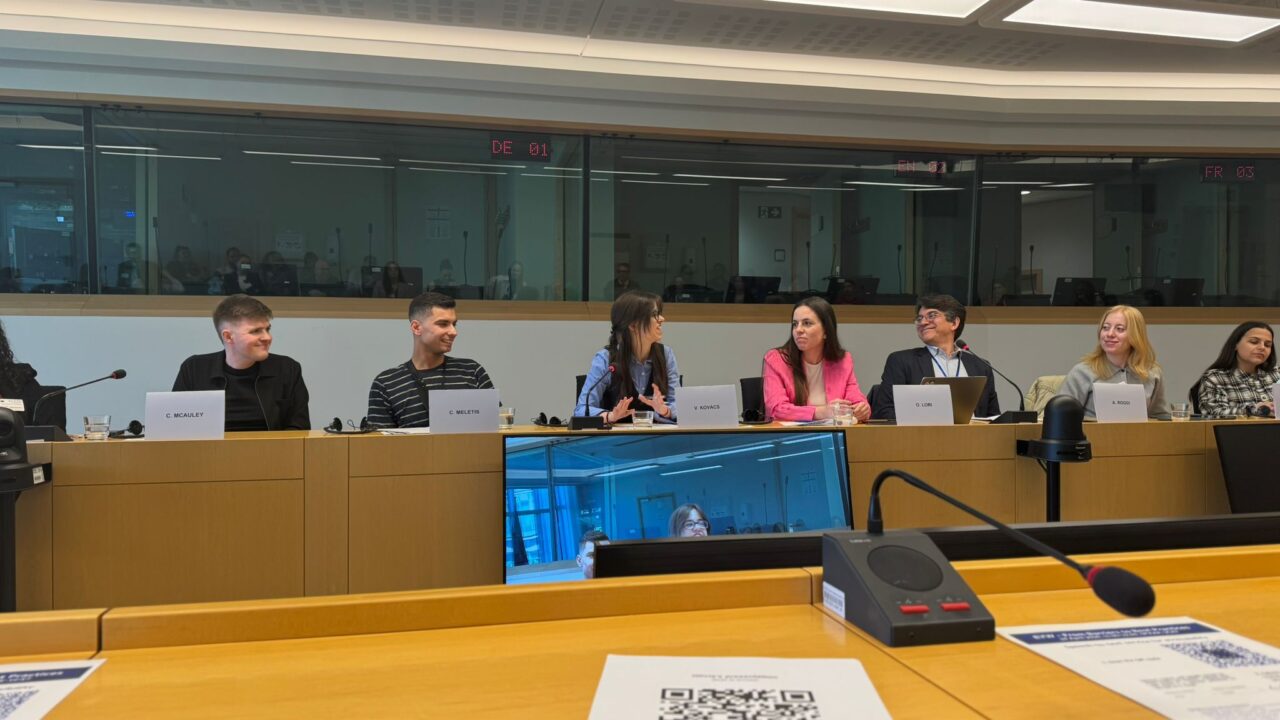
These were the questions behind a session we hosted at the European Parliament as part of the European Youth Week, bringing together young people, organisers and policymakers to talk honestly about inclusion in ESC and Erasmus+.
And honest is the key word here.
The main speakers were: Veronika Kovacs, Christos Meletis, Fatma Yazici, Conor McAuley, Alessandro Roggi and Olivia Lori
The reality: it is not one story
We heard directly from people who have taken part in these projects and their experiences were very different.
Some spoke about how powerful it can be when things work. Learning new skills, living abroad, meeting people from different backgrounds and feeling part of something.
Others shared the opposite. Moments where things broke down. When accessibility was not considered, when support was missing or when assumptions were made about what they could or could not do.
Same programme. Very different realities.
So what makes the difference?
From an organisational perspective, a lot of it comes down to choices.
Planning ahead. Budgeting properly. Being flexible. Actually asking people what they need instead of guessing. Combating implicit bias, and more.
At ENIL, we have been running inclusive ESC placements for years. And we aim to use our knowledge for improving the inclusion of the programme and also motivating more organizations to do the same.
Of course, not everything is in an organisation’s control. Funding rules, administrative systems and wider structures can still create barriers.
But those barriers do not fully explain why some projects are inclusive and others are not.
The policy gap
At EU level, there are already tools and funding streams meant to support inclusion. But in practice, they do not always translate into accessible experiences.
There is still a gap between what exists on paper and what happens on the ground.
Unless that gap is addressed through clearer guidance, more flexibility and real accountability, inclusion will continue to depend on who is organising the project rather than being a standard.
From barriers to solutions
We did not just talk about what is going wrong.
We also looked at what works.
Accessible projects are not theoretical. They are already happening. People are already doing this well. The problem is that these practices are not consistent or widespread enough.
The main takeaway
One idea kept coming up again and again.
Inclusion does not just happen.
It is not something you add at the end. It is something you build from the start.
And when you do, when you actually plan for it, it works.