ENIL Calls for the Structural Funds to Support Independent Living

The European Network on Independent Living (ENIL) joins the European Expert Group on Transition from Institutional to Community-based Care (EEG) in calling upon the Council of the EU and the European Parliament to uphold the ex ante conditionalities relevant to the Structural Funds’ support of community-based alternatives to institutional care for children, persons with disabilities- including intellectual or psychosocial disabilities – and older persons.


  The EEG – whose members are nine European non governmental organisations active in the field of social inclusion, non discrimination and fundamental rights, the European Office of the UN High Commissioner for Human Rights and UNICEF – is advocating for Structural Funds to facilitate the social inclusion of children, persons with disabilities – including intellectual or psycosocial disabilities – and older persons, and their access to quality social and health care services in the community, as an alternative to the care provided in segregating residential settings.


  For this reason, the EEG has welcomed the inclusion of “transition from institutional to community-based care” within the scope of the European Commission proposals for the new EU cohesion policy 2014-2020. In particular, we have welcomed the thematic ex ante conditionality regarding the objective “promoting social inclusion and combating poverty”, which provides that the national strategies for poverty reduction should include measures for the shift from residential to community based care; as well as the general ex ante conditionality requiring the effective implementation of the UN Convention on the Rights of Persons with Disabilities.

  We regret that these two important elements of the ex ante conditionalities have been removed in the compromise text agreed by the Council on 24 April 2012 within the framework of its partial general approach on the EU new cohesion policy .

  During the current and past Structural Funds programming periods it has been shown that an appropriate combined use of the ERDF and the ESF can play an important role in supporting Member States’ efforts in moving from institutional to community-based care (a process also known as “deinstitutionalisation”). However, we believe it is crucial that such investments should be planned and implemented in the context of Member States’ structural and strategic reforms, and in line with international human rights standards.

  Therefore, we call upon the Council and the European Parliament to do the following:

1.  Under the thematic ex ante conditionalities of the objective “promoting social inclusion and combating poverty”, uphold the inclusion of “measures for the shift from residential to community-based care” in the national strategic policy frameworks to tackle poverty and social exclusion. The social inclusion objectives of Europe 2020, which include eradicating child poverty, promoting the active inclusion of the most vulnerable groups, providing decent housing for everyone and overcoming all forms of discrimination, cannot be achieved if the Member States fail to strategically address the situation of over 1,2 million Europeans who live in long-stay residential institutions, segregated from the rest of society.

2.  Uphold the general ex ante conditionality requiring the existence of a mechanism which ensures effective implementation and application of the UN Convention on the Rights of Persons with Disabilities. Article 19 of the Convention requires the EU and its Member States to take all appropriate measures to ensure that persons with disabilities can live their lives independently, included in the community. We believe that the existence of the proposed mechanism would help Member States and the European Union comply with this international obligation, by ensuring that all Structural Funds investments in care infrastructure and services promote the enjoyment of fundamental rights and social inclusion of persons with disabilities.

Share this article

  • Add to favorites
  • Facebook
  • Twitter
  • Email
  • RSS

Presenting the european project team for the supporting disabled young people to become future leaders of the independent living movement programme

April 29, 2012 under Good Practice, IL activists, News

Presenting  the european project team for the supporting disabled young people to become future leaders of the independent living movement programme

The project will entail a weeklong study session at the Council of Europe with the purpose of encouraging and supporting disabled young people to advocate for human rights in their countries and at European level. Participants will have an opportunity to gain a better understanding of disability issues and acquire skills to promote the views of other disabled young  people from their countries. The project team consists of 5 members who have the responsibility for choosing who will  attend the study session at the Council of Europe.

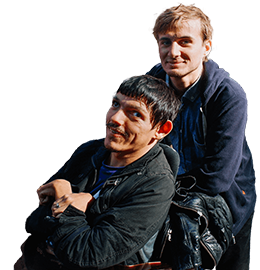
Miro Griffits – has an undergraduate degree in Psychology and is currently doing a Masters in Disability Studies. He runs his own company, which advises and consults on all issues to do with Disability Equality.  His work involves advising, negotiating and training, from government departments to charities and small regional networks. He is also a member of Equality2025 – the United Kingdom Government Advisory Body for Disability Issues.

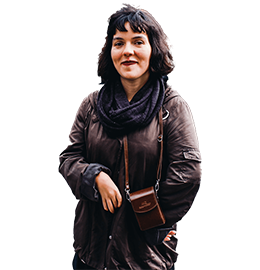
Zara Todd – has a degree in psychology and a Masters in Central and Eastern European studies. She works for a Disabled Peoples Organisation called ALLFIE (the Alliance for Inclusive Education) supporting and training a group of  disabled young people to become researchers. Before that, she has worked with a number of disabled children’s organisations working on participation and involvement. Zara has worked on policy and campaign work including advising government, since the age of 11 both in the UK and internationally. Currently she is setting up a website with a friend in New Zealand to help disabled activists under 30 connect and share knowledge internationally.

Click here to read more.. »

Share this article

  • Add to favorites
  • Facebook
  • Twitter
  • Email
  • RSS

News from Slovenia

This time we would like to tell you about about what has been going on over the  past few months in connection with our Independent Living programme. At the end of last year after a long battle lobbying politicians and raising public awareness, we finally succeeded in changing the Law on Ownership Transformation of the Slovenian Lottery, which changes the composition of the Council of the Foundation. The Foundation  funds disability and humanitarian organisations in  Slovenia from concession funds from the Slovenian Lottery. With this change we have succeeded in breaking the monopoly held by the traditional disability organisations  which are united in the National Council of Disability Organisations, and who previously had an absolute majority in the Council of FIHO.

This monopoly allowed  non-transparent and discriminatory distribution of public funds that were supposed to be earmarked. In strong support of our arguments concerning the admissibility of such behavior there were also several judgments of corruption found by  the Commission for the Prevention of Corruption and the Court of Audit. Despite the powerful propaganda by the NSIOS that the proposed changes will decrease the amount of money available for disabled people and their attempts to hold a referendum on the issue, they have been unsuccessfuland MPs overwhelmingly supported the changes. This means that a battle was won, but the war is not over yet.

Click here to read more.. »

Share this article

  • Add to favorites
  • Facebook
  • Twitter
  • Email
  • RSS

Real progress on Independent Living in Serbia

  1. Three CIL members (from Sombor, Smederevo and Leskovac) are on different lists for local parliament elections in May 2012CIL Serbia Logo

The impact of having Gordana Rajkov as the first disabled MP has led more disabled people to become involved with politics, initially at a local level. Rajkov has influenced the disability movement and policy development at both national and level level, promoting the idea that  “disability could be the investment – not a burden”.

CIL members – Julijana Catalinac from Sombor, Dusko Savic from Smederevo and Svetislav Marjanovic from Leskovac are on the lists of three political parties and have very good chances to become members of local city councils. There are four other DPOs in other Serbian cities who have become politically active for the next elections in May 2012. Click here to read more.. »

Share this article

  • Add to favorites
  • Facebook
  • Twitter
  • Email
  • RSS

Presentation of the book on The family dimension of the UN Convention

April 27, 2012 under Good Examples, Human Rights, News, UNCRPD

Source: http://www.coface-eu.org/en/Publications/The-Family-Dimension-of-the-UNCRPD/

On the occasion of the International Day of Families COFACE will present together with Ádám Kósa (MEP, Chair of the Disability Intergroup) the new COFACE publication, The family dimension of the United Nations Convention on the rights of persons with disabilities at the European Parliament in Brussels on 15 May 2012, from 16:00 to 17:30.

Background information

With this publication, COFACE aims to highlight the family dimension of the Convention, contribute to its dissemination, support the implementation of the European Commission’s European Disability Strategy 2010-2020 as well as the European Parliament’s report on mobility and inclusion of people with disabilities drafted by Ádám KÓSA MEP. It also aims at empowering European citizens living with disabilities and their families.

May 15, the International Day of Families is devoted to mark the relevance that the international community places on family issues as a fundamental unit of our society, as well as to highlight concerns about their situation in many parts of the world.

This day provides also an opportunity to reflect on the work started in 1994 and to celebrate the importance of families, people and societies around the world.

COFACE is delighted to invite you to attend this conference which builds on the experience of COFACE’s Disability Working Group as well as the European Parliament Disability Intergroup, discussing and debating the UN CRPD and its family dimension.

Please feel free to disseminate this information within your membership and contact details!

Registration is free and will be open until 7th of May. To obtain more information and register for this event, please visit:

http://www.coface-eu.org/en/Events/Forthcoming-events/

For further inquiry, please contact: secretariat@coface-eu.org

We look forward welcoming you in Brussels for a fruitful debate!

The COFACE Team

Share this article

  • Add to favorites
  • Facebook
  • Twitter
  • Email
  • RSS

Call for Input into an Online Youth Network

April 27, 2012 under ERT, Good Examples, IL activists, News

International Network for Young Disabled People

We are two disabled young people, planning to set up an international online network for disabled young people aged 16-30, to network, skill and knowledge share. We believe that by providing an interactive space for disabled young people to do so will not only allow young disabled people from around the world to share and in turn, learn new knowledge and skills, but also that it will empower disabled young people to connect and create positive change in their communities. We intend this network to be built and run by disabled young people, for disabled young people.

We are contacting you because of your expertise and we would very much appreciate your input. We have created a questionnaire to help us design the site, which can be found at http://kwiksurveys.com?u=iydpn. The survey is only 9 short questions and will close on 27 May 2012.

We also have a Facebook page that we will be using to keep in touch with people until the site is launched https://www.facebook.com/pages/International-Network-for-Young-Disabled-People/345625542148113

Please forward this information on to anyone you think maybe interested in this project.

Erin and Zara

Share this article

  • Add to favorites
  • Facebook
  • Twitter
  • Email
  • RSS

The annual meeting of Fundamental Rights Platform

The Fundamental Rights Platform (FRP) of the European Union Agency for Fundamental Rights (FRA) had its two day annual meeting in Vienna. The annual meeting brings together members of the Agency’s network to work in partnership on fundamental rights. This 5th FRP meeting aimed to:

  • encourage a European debate on fundamental rights among different civil society organisations;
  • facilitate knowledge exchange and the sharing of of promising practices among Fundamental Rights Platform participants;
  • inform the work of the FRA about challenges and promising initiatives on the ground;
  • create opportunities for networking and further cooperation between civil society, the FRA and other actors.


Elected members to the Advisory Panel 2012-2013

One of the main events of this year’s meeting was the election to the new Advisory Panel. The Advisory Panel supports the work of the Director of the FRA in organising and coordinating the Fundamental Rights Platform (FRP) and inputs into the preparation of relevant meetings and events. 

The Panel is also a tool for ensuring the  good running of the Platform, suggesting, where necessary, adjustments and improvements to processes and procedures, and thus facilitating a vibrant dialogue between the Platform and the Director of the Agency. There were 24 candidates of which Jamie Bolling, the executive director of ENIL – the European Network on Independent Living was one. Jamie was supported by ENIL and EDF and was happy to be re-elected to the panel along with: Dominika Bychawska-Siniarska – Helsinki Foundation on Human Rights, Roger Kiska – Alliance Defense Fund, Allan Leas – European Council on Refugees and Exiles (ECRE), Catherine Lynch – Irish Network Against Racism, Evelyne Paradis – International Lesbian, Gay, Bisexual, Trans & Intersex Association – European Region (ILGA-Europe).


Click here to read more.. »

Share this article

  • Add to favorites
  • Facebook
  • Twitter
  • Email
  • RSS

UK is Breaching Human Rights of Disabled, UN told

Source: Stephen Naysmith – Herald Scotland

A SCOTTISH campaigner will this morning (2nd April 2012) tell the Human Rights Council of the UN that the UK Government is in breach of its human rights obligations to disabled people.

In Geneva today, Dr Pauline Nolan, Policy Officer for Inclusion Scotland, will submit evidence to a preliminary hearing ahead of a planned review of the human rights record of 14 states, including the UK.

On behalf of the Campaign for A Fair Society – a coalition of more than 70 Scottish charities – Dr Nolan will warn the cumulative impact of welfare reform and cuts to benefits affecting disabled people will mean their ability to live a full life is impaired. In particular, she will argue that welfare changes undermine their right to be included in the community.

Click here to read more.. »

Share this article

  • Add to favorites
  • Facebook
  • Twitter
  • Email
  • RSS

Able Tourism

Martin Naughton, Co-Executive Director of ENIL and Minister Phil Hogan TD. at the launch of ABLE Tourism on the 12th April 2012 in Dublin,

The new Q Mark in relation to ABLE Tourism was launched on 12th April 2012 by Minister Phil Hogan TD in Dublin, Ireland.

Able Tourism is the new Q Mark for accessibility created by Excellence Ireland Quality Association, the guardians of the Q Mark, in association with Fáilte Ireland. Their aim is to become global trendsetters by turning Ireland into the first ABLE destination in the world.

The Q Mark for accessibility ( ABLE) will be awarded to hotels, self-catering accommodation and caravan and camping complexes that have achieved the Q Mark standard in the key areas of ABLE Employees, ABLE customers and ABLE built environment.

Tourists who log onto www.ABLEireland.ie to access ABLE destinations will be guaranteed to have accessible bedrooms, bathrooms, showers and kitchens. They will also benefit from telephones with induction cables and emergency accessible supports, such as vibrating pillows or personal alarms. Other services that will be provided include accessible car parks and routes into premises and easily identified lifts with accessible call buttons and wide doors that accommodate wheelchairs.

For more information on ABLE Tourism please visit their website here

Share this article

  • Add to favorites
  • Facebook
  • Twitter
  • Email
  • RSS

TANDIS (Tolerance and Non-Discrimination Information System)

April 27, 2012 under Good Practice, Human Rights, News

TANDIS (Tolerance and Non-Discrimination Information System) was developed by the OSCE Office for Democratic Institutions and Human Rights (ODIHR). The ODIHR serves as a collection point for information related to tolerance and non-discrimination on the basis of information received from the participating States, and in co-operation with civil society and intergovernmental organisations. TANDIS was developed by the ODIHR’s Tolerance and Non-Discrimination department in order to share and promote practices and initiatives and to provide information on issues related to tolerance and non-discrimination throughout the OSCE region.

TANDIS gives access to:

  • Information received from the OSCE participating States, specialized institutions and other organisations
  • Country pages providing information on country initiatives, legislation, national specialised bodies, statistics and other information
  • Thematic pages with information related to different key issues
  • International standards and instruments
  • Information from the intergovernmental organisations including country reports and annual reports.

For more information on TANDIS please visit the website here

Share this article

  • Add to favorites
  • Facebook
  • Twitter
  • Email
  • RSS