Choosing where to live can determine whether someone can study, work, build relationships or leave a situation in which they feel unsafe. For many disabled people, that choice is restricted by inaccessible homes, unaffordable rents and support systems that decide where and how they must live.
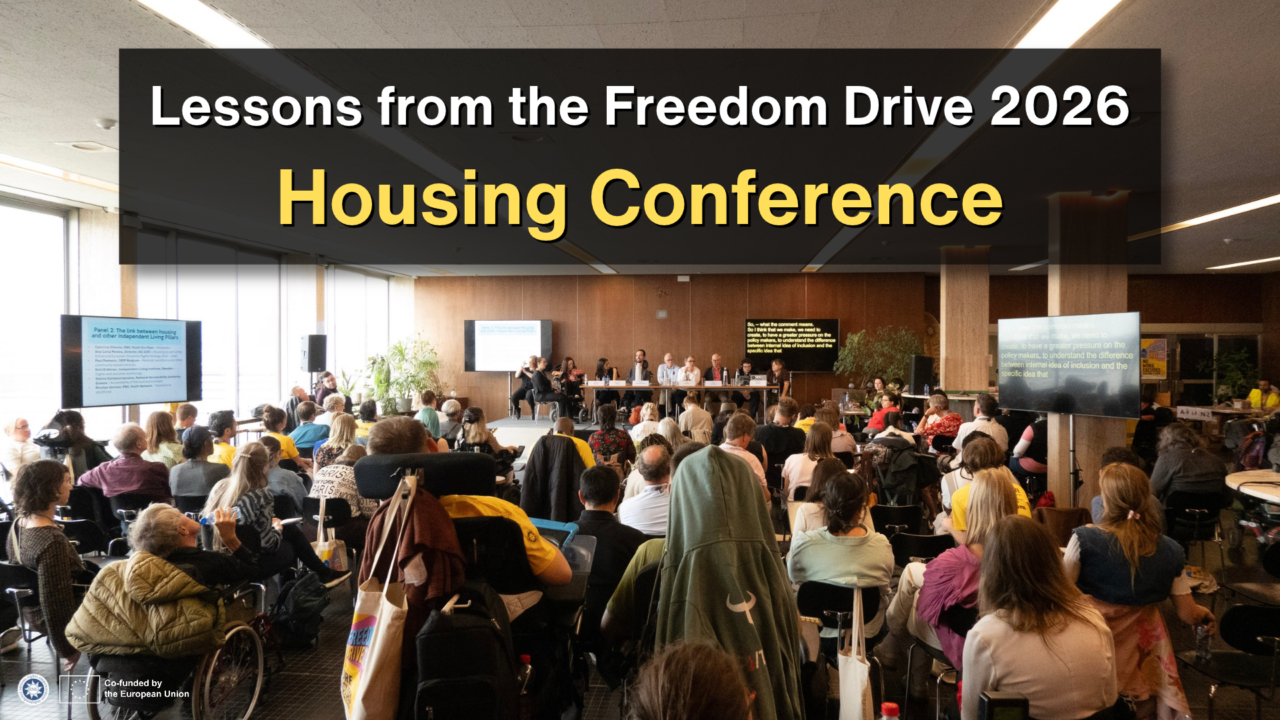
On 30 September, the Freedom Drive 2026 conference on housing and Independent Living brought disabled people, researchers, advocates and policymakers together in Brussels. Across three panels, they examined those barriers and shared ways to challenge them.
The discussions offered practical lessons: plan housing and support together, act before people reach a crisis, involve disabled people in decisions about public money, and build stronger connections with other movements working for housing rights.
Start with the life a person wants to live
Ashraf Fruhg, from Disabled Refugees Welcome in Sweden, described how disabled refugees can spend years moving between temporary accommodation without finding a secure home. Inaccessibility intersects with poverty, language barriers, migration status and complicated administrative systems.
A room may provide somewhere to sleep while leaving someone unable to use the bathroom privately, reach local services or plan their future. Ashraf called for housing policies shaped by disabled people’s experiences from the beginning.
Dr Carmen Yau connected these experiences to the everyday meaning of choice. Can someone decide where and with whom to live? Can they receive support at the times they need it? Can they visit friends and participate in their neighbourhood?
She also challenged assessments that make access to housing adaptations depend on household income. A relative’s earnings do not necessarily give a disabled person control over money or the means to secure a suitable home.
For housing authorities and advocates, these contributions suggest a more useful starting point for assessment: identify the person’s wishes, routines, relationships and support requirements, then examine what prevents them from living that life.
Plan before a housing crisis occurs
Ciara Brennan, from Genio in Ireland, examined the consequences of leaving housing needs to families and the private market. When a parent becomes unable to provide support or a home becomes unsuitable, needs that were predictable can become emergencies.
Emergency placements can move people away from their communities and leave them accepting whatever is available. Ciara argued that discussions about the cost of accessible housing must also consider the financial and human costs of failing to plan.
Paul Pasteels, from GRIP Belgium, showed what support organised around a person can make possible. He explained how his personal budget helps him arrange assistance around his work and other activities. His assistants support him with tasks including preparing meetings and managing administration.
His parent, accompanying him as an assistant, reinforced the importance of planning before a family reaches a crisis.
The practical lesson is to bring housing, personal assistance and longer-term support into the same conversation early. That planning must follow the disabled person’s wishes, and public authorities must make the necessary options available. Families should not be left to construct an entire support system alone.
Accessibility must extend beyond the front door
“Accessibility cannot stop at the front door,” said Stelios Kympouropoulos, President of Greece’s National Accessibility Authority.
He described how an accessible apartment can still leave someone isolated if surrounding pavements, transport, shops and services are inaccessible. Affordability matters just as much: a suitable home remains out of reach if the person cannot afford to live there.
Emil Erdtman, from the Independent Living Institute in Sweden, added that housing adaptations and assistive technology must work together. A wheelchair is of limited use at home if doorways are too narrow. Equipment may require sufficient space, suitable structures or a reliable electricity supply.
These contributions provide practical questions for assessing a housing proposal: can the person enter and use the home, use their equipment, receive their chosen support and reach the places that matter to them?
Opening speaker MEP Jagna Marczułajtis-Walczak also connected housing with wider accessibility. Her contribution challenged the separation of energy efficiency from accessibility in renovation. Improving buildings should be an opportunity to address both.
Judge housing by the control residents have
Nicolas Joncour, an ENIL Youth Board member and university student who uses round-the-clock personal assistance, described his experience of living in student accommodation. His account showed how substantial support needs can coexist with control over one’s life.
He questioned housing described as “inclusive” when residents have little say over who they live with, which support they receive or the rules governing their daily lives.
Several contributions returned to the importance of separating housing from support. Changing a support provider should not mean losing one’s home. Needing assistance should not require accepting a particular living arrangement.
During the discussion, Teodor Mladenov pointed participants towards the UN Committee’s General Comment No. 5, which explains the right to Independent Living and community inclusion. It provides a basis for examining whether proposed housing arrangements respect choice and control. Read ENIL’s explanation of Independent Living.
For anyone evaluating a project, the questions should go beyond its name or size. Who chooses the residents? Who controls daily routines? Can someone change their assistant, have privacy and participate in community life?
Give disabled people power to shape and monitor policy
Pippa Black, from Independent Living Movement Ireland, shared lessons from influencing Ireland’s housing strategy.
She described how a general consultation can dilute disabled people’s priorities when responses from professionals, providers and others outweigh their voices. ILMI and Inclusion Ireland developed their own analysis with disabled people, placing lived experience and the right to Independent Living at its centre.
Her contribution highlighted the difference between attending a consultation and having an organised role in shaping policy, checking implementation and holding authorities accountable.
Organisations led by disabled people can take several lessons from this experience: develop collective demands, prepare representatives for policy discussions, ask for clear targets and insist on an ongoing monitoring role. Participation should continue after a strategy is published.
Maria José Aldanas, from FEANTSA, explained another route to accountability: collective complaints under the European Social Charter. These can challenge wider failures affecting groups of people, including housing exclusion. FEANTSA has used this procedure before the European Committee of Social Rights. More about collective complaints.
Her contribution underlined the value of documenting patterns. Repeated barriers, inaccessible procedures and policies that leave people without suitable housing can provide evidence for advocacy and, where appropriate, legal action with specialist organisations.
Follow the funding and question the safeguards
Ana Carla Pereira, from the European Commission, described how accessible housing depends on investment in personal assistance, community services and assistive technology. She highlighted inconsistent accessibility standards, limited data and the extra costs disabled people can face.
She encouraged participants to remain involved in discussions about the next Multiannual Financial Framework—the EU’s long-term spending plan for 2028–2034. The next EU budget explained.
Steven Allen, from Validity Foundation, challenged whether existing monitoring and complaints mechanisms were adequate. Drawing on work investigating EU-funded projects, he argued for stronger safeguards and accountability.
For advocates, the task is to examine what funded projects actually make possible. Relevant questions include who controls the support, whether residents have real choices and what action follows when a project reinforces segregation.
Stefan Moser, from the Commission’s Housing Task Force, discussed opportunities for cooperation through European housing initiatives. The debate made clear why disabled people’s organisations need to be involved while investment priorities and implementation arrangements are being developed.
Build alliances around shared barriers
Speaking in place of Aneta Genova and drawing on her notes, Steven Allen argued that strong evidence and legal arguments need to be matched by greater collective influence.
He called for closer cooperation with movements working on housing, poverty, migration, Roma rights, women’s rights and climate justice. These connections reflect people’s lives: disabled people also experience racism, insecure migration status, gender-based discrimination and poverty.
Audience contributions connected inaccessible housing with rising rents, short-term rentals and displacement. Working together can strengthen demands for affordable homes while ensuring that accessibility and support remain central.
A practical step for local organisations is to identify existing housing campaigns and develop shared demands. Disability organisations should help shape those campaigns from the outset, with their participation made accessible.
Taking the conference’s lessons forward
In the closing call to action, ENIL’s Veronika Kovacs highlighted accessibility from the beginning of housing design, better disability data and the connection between unsuitable housing, homelessness and institutionalisation. The closing discussion also returned to cooperation across movements and disabled people’s control over both their homes and their support.
For participants and readers, there are concrete ways to carry that work forward:
- Bring housing barriers to a disabled people’s organisation, so individual experiences can inform collective advocacy.
- Ask local authorities for clear plans and targets for accessible, affordable housing and the support needed to live in it.
- Scrutinise proposed housing projects by asking who will control daily life and whether residents can choose their support.
- Seek a continuing role in policy monitoring, including access to information about spending and results.
- Build links with other housing and equality campaigns, agreeing demands that address shared barriers.
The responsibility to deliver accessible housing and adequate support remains with public authorities. The conference offered ways for disabled people and their allies to organise, question decisions and demand evidence that housing policies are expanding people’s choices.