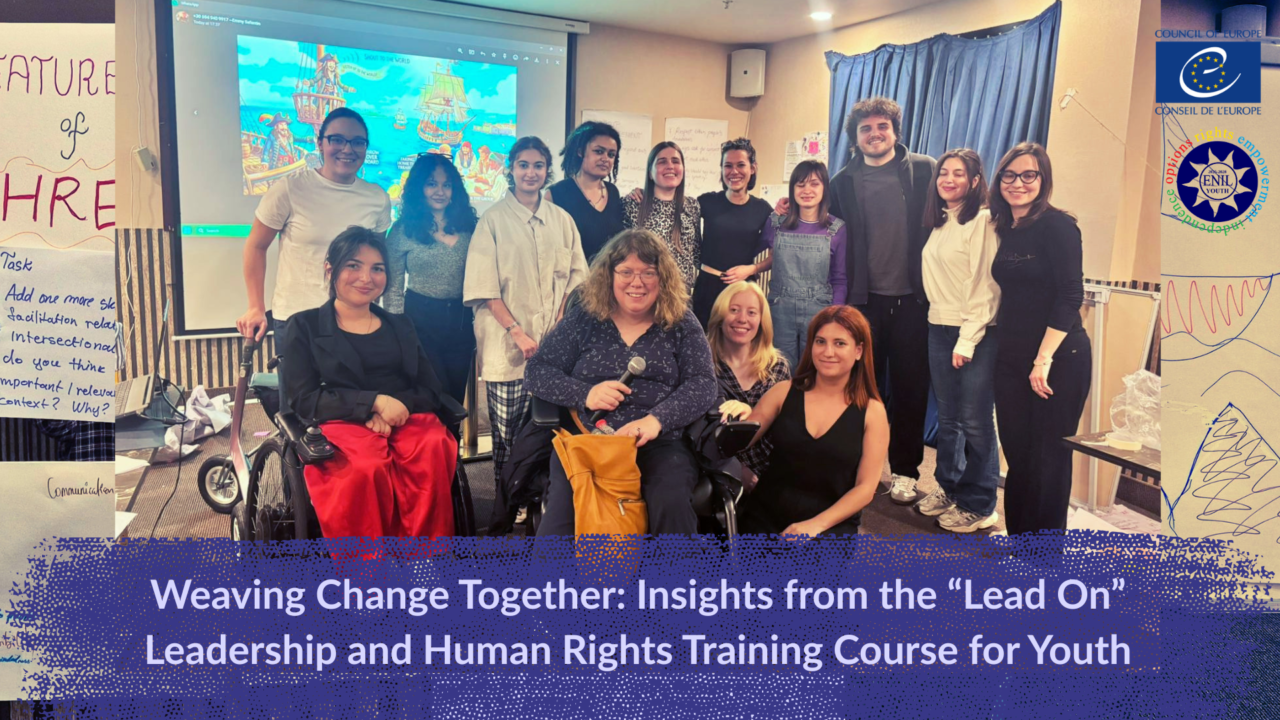
For young activists worldwide who set out with the desire to create social change, charting a roadmap often represents a challenging journey that must be walked alone. However, encountering the right mentors on this arduous journey transforms individual effort into a collective power. In this sense, the “Lead On: International Leadership and Human Rights Training” program, organized by the European Network on Independent Living (ENIL) Youth Network and supported by the European Youth Foundation, has been more than just a training session for us young disabled activists; it has been a turning point.
As I begin this article, I consider it a duty to express my deepest gratitude to ENIL Youth for providing us with this vision, and to the European Youth Foundation for enabling our voices to be heard by supporting this vital initiative.
The Lead On program was built on the foundation of the Independent Living philosophy and possessed a comprehensive structure aimed at developing the advocacy practices of young disabled people. Throughout the program, we did not limit ourselves to theoretical knowledge; we also conducted in-depth examinations of advocacy methodology, strategic planning, and how to navigate systemic barriers. Learning to use the advocacy tools necessary for young disabled individuals to become equal and active subjects in all areas of social life was one of the most tangible outcomes of the program.
The training process sharpened the participants’ skills in defining problems through a rights-based perspective, developing innovative and sustainable solutions, and most importantly, creating a tangible impact on decision-makers. At this point, the fact that disability is a human rights issue in the light of the social model became the center of all our work and discussions. Internalizing the social model to this extent added a new depth to our activism.
As a young woman and human rights activist living in Turkey, the impact of this program on me has been multifaceted. The insights I gained from the Lead On project regarding problem-solving and effectively mobilizing target audiences—two of the most critical skills for an activist—have established a strong foundation for my future work.
The technical information we acquired regarding project writing and implementation processes showed us how to transform the ideas in our minds into concrete and sustainable projects. Yet, beyond technical knowledge, the most precious part of this journey was realizing that we are not alone.
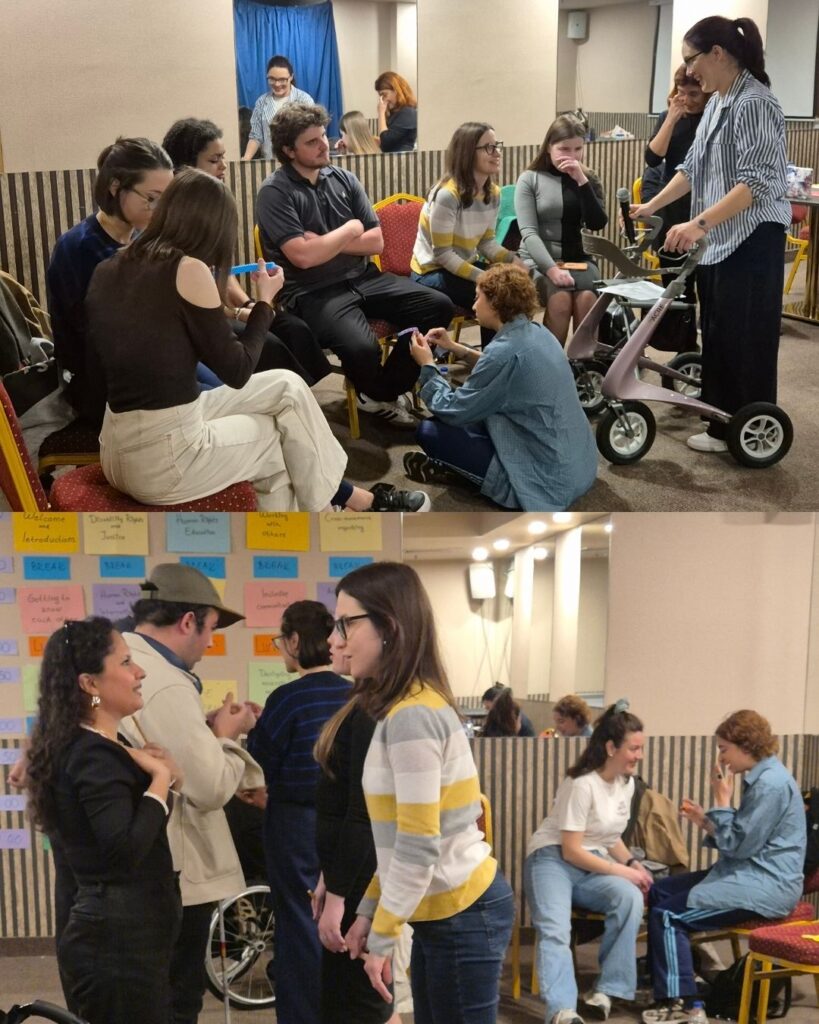
Advocacy is often an under-studied field where activists sometimes feel trapped in a vacuum or even in echo chambers. Young activists, in particular, frequently face feelings of burnout and isolation when confronted with bureaucratic hurdles or social prejudices at the local level. Listening to the experiences of my peers from different countries and seeing how similar problems were overcome through creative methods in different geographies opened my horizons. Being part of this international network proved that we are actually branches of a giant tree, stretching in different directions but nourished by the same roots. This program replaced the sense of loneliness with solidarity, and uncertainty with a resolute strategy.
The success of an organization is undoubtedly directly related to the effort spent behind the scenes. From the first exciting moment we filled out the application form to the bittersweet and hopeful moment of farewell, there was a magnificent team by our side. I would like to thank all the ENIL representatives who made a superhuman effort to ensure the smooth progress of the event, where communication never faltered, and every need and accessibility requirement was meticulously considered. Thanks to their smiling faces, solution-oriented approaches, and the safe space they provided, we were able to focus entirely on learning and building connections.
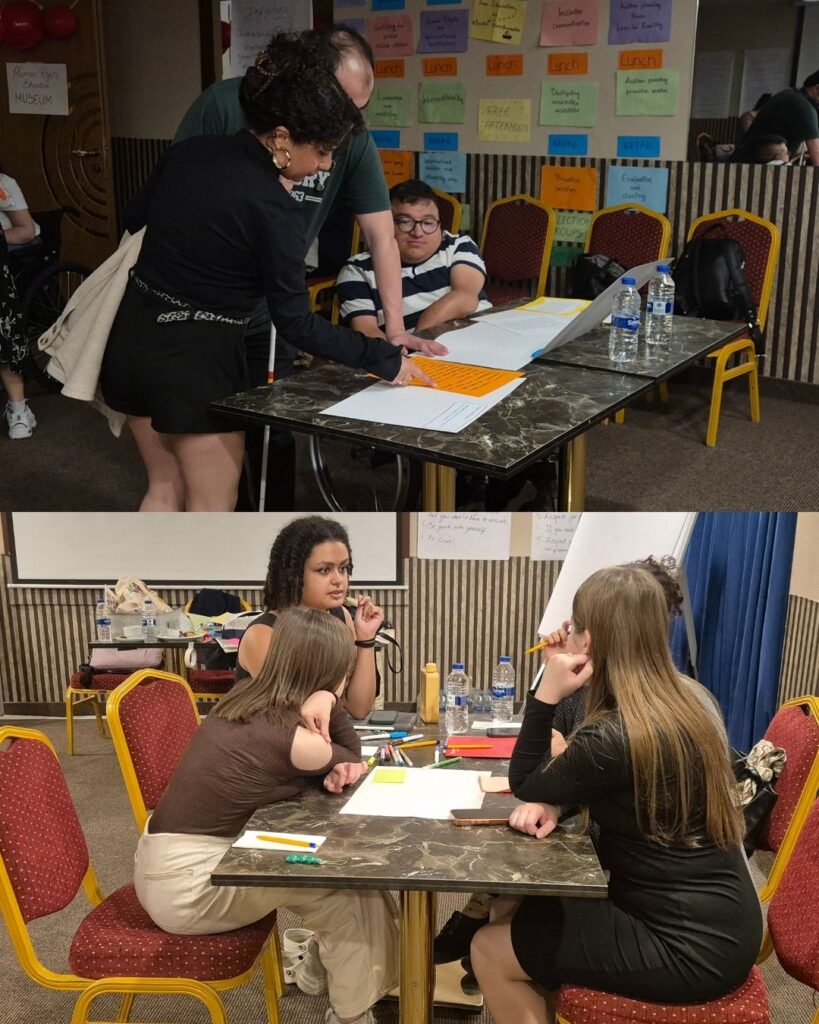
The path of advocacy is long and rugged; however, with the inspiration we draw from this program, we know that the greatest power we have to change prejudices and create a more accessible world is to stand together. As young leaders from all over Europe, we do not only carry back knowledge to our own countries; we also carry the spark of a collective change. We must remember that achieving Change is Possible Together!
As we continue on our way with this goal, we are more determined and equipped than ever to build a more accessible, fairer, and independent future. Thank you ENIL, thank you European Youth Foundation, and thank you to all my fellow travelers who walked this path with me.
Mihriban Boyacı
Training participant and member of the ENIL Youth Network